

How to Actually Make Money as a Writer
You can absolutely make six-figures as a writer – it's just probably not coming from selling books. Here's how: with industry data to back it up and my own numbers as proof.

Dear friend,
The other day, I was walking my dog Albee in the park when someone saw my Write Your Friggin’ Book Already® shirt and asked me if I was a writer. I proudly said yes, and they immediately asked, “but how do you make money?”
The assumption being that all artists are starving.
I’m here to debunk that myth – and a couple others – and prove that you absolutely can make money as a writer.
It’s just probably not going to come the way that traditional publishing and Hollywood like to glorify and romanticize.
Just like I shared the full rundown of the numbers for my crowdfunding campaign last week, this week I’m opening my books to show you the exact numbers of how I make a full-time living as a writer – and giving tips for how you can do the same.
Myth #1: You Can’t Make Money as a Writer
First and foremost, I want to demystify this idea that you cannot make money as a writer. I was told that all growing up, and I feel like if I had just gone all in, I actually would have made more money.
Instead, I listened for way too long to people who told me there was no money to be made in the arts.
Y’all. Taylor Swift is a billionaire. Beyoncé, Jay-Z, billionaires. There’s money to be made in the arts. You just have to think of yourself as a creative entrepreneur. Art is your business.
In my book The Writer’s Career Guide: How to Build a Sustainable Creative Life on Your Terms, I have a long list of ways you can make money as a writer. Here are a few:
Content writing,
technical writing,
grant writing,
copywriting,
journalism,
business writing,
ghostwriting,
script writing,
educational content,
marketing emails.
The list goes on and on. There are so many ways to make money as a writer. And yes, that can include writing books, but you’re probably not going to make it on book sales alone.
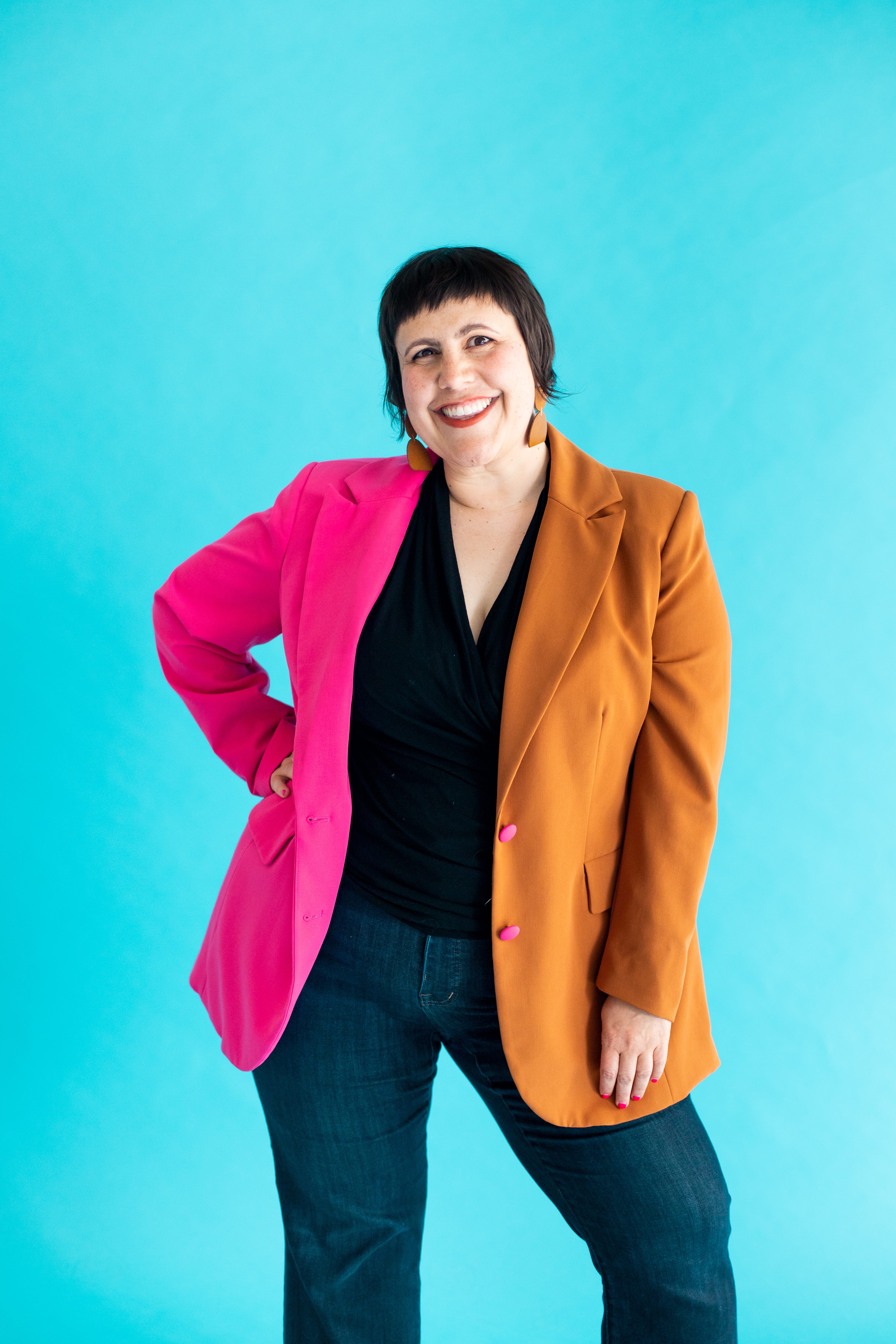
Myth #2: You Can Make Money on Book Sales Alone
But here’s the second myth I want to debunk: that you’re going to be able to support yourself off of book sales alone.
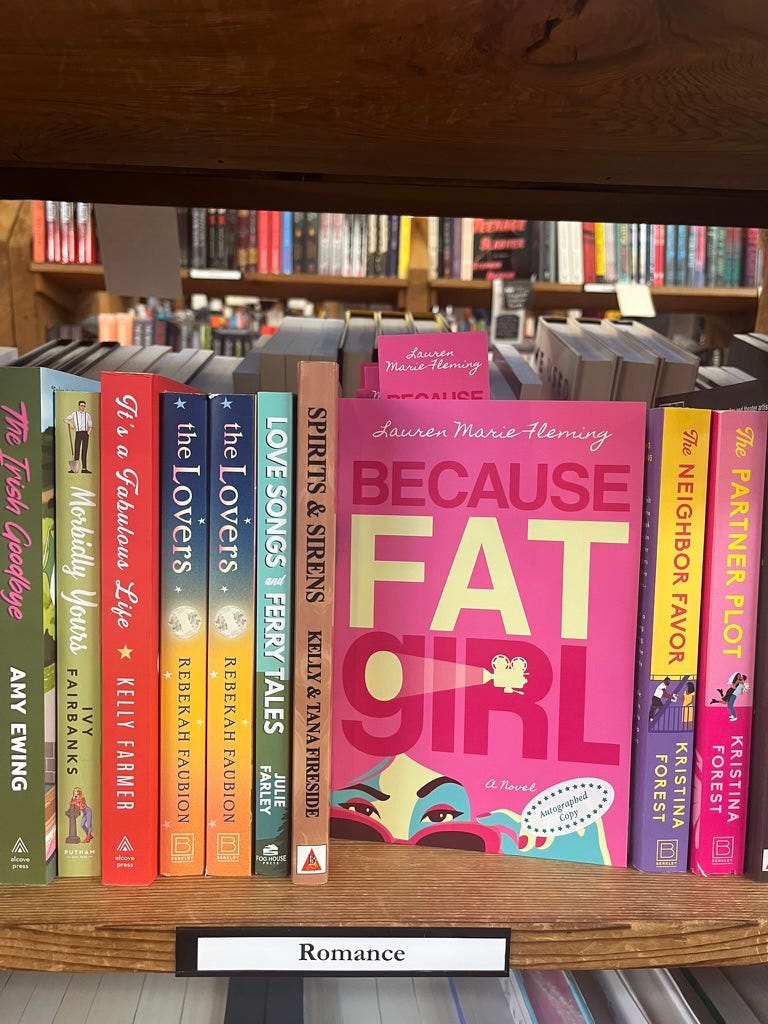
My novel Because Fat Girl sold more copies than most, and it still barely paid any of my bills.
Part of that is because books are expensive to print and people don’t pay a lot for them, so the margin is tiny.
Another reason is that, similar to other art forms, the artist is often the last person to get paid. Publishing can be pretty exploitative, and sometimes you end up losing money on your book even with a traditional publisher.
When I got into the industry, I had no idea how little royalties traditionally published authors made, so I’m sharing these numbers here to help you understand how they work.
Traditional Publishing Royalties: The Real Numbers
Here’s a general breakdown of what you make off royalties in a traditional publishing deal — based on a variety of contracts from myself, my friends, and my clients:
E-books: 10–20% of whatever they sell it for (anywhere from 99 cents to $6). The publisher manages the pricing. You don’t get a say.
Hardcovers: 5–10% of a $20–$30 hardcover
Paperbacks: 6–8% of a $10–$16 paperback
Audiobooks: You get about 30–50% of what the publisher gets, so overall about 3–10% of a $15–$30 audiobook
If you’re lost in all those percentages, here’s my rule of thumb:
You get about 50 cents to a dollar per book sold.
And don’t forget — with traditional publishing, you almost always need an agent, so your agent gets 15% of that.
Considering the average book sells under 1,000 copies, you’re looking at years of work for about $850.
It can be easy to see why people give up on traditional publishing and turn to self-pub.
Self-Publishing Royalties
To self-publish, most people use Kindle Direct Publishing through Amazon, which gives you about 30–70% of your sale depending on the pay structure you use. While KDP is far from perfect, it’s a much better percentage than traditional publishing.
As you’ll see below with my numbers, you don’t always get the same reach and distribution that traditional publishers have, however that depends on the marketing budget your publisher is willing to put into your book.
Even with those higher percentages, you’re still not looking at much money coming in when you remember that the average book sells less than 1,000 copies.
I break all of this down even more in The Writer’s Career Guide if you want to get into it, but suffice it to say: you’re not going to get rich off selling your books, especially at first.
Where the Money Really Comes from for Writers
Even the bestsellers I know don’t make a lot of their money on just book sales. They’re getting it on movie placements, product placements, retreats, speaking gigs, and things that relate to the people reading their books and make them want to invest even more in their worlds.
Think of it like this: If I sold you a Post-it pad, you’re probably also going to want a pen or a highlighter, so I should try selling you those as well.
What are the things you can sell around your book that help people get more use out of it?
While I haven’t made much money off my actual book sales, I have made a lot of money around my books. Here’s how you can do the same.
Products, services, and experiences around your books
For example, I have The Writer’s Career Guide — and I offer coaching around how to build a career as a writer. The book helps me get coaching clients.
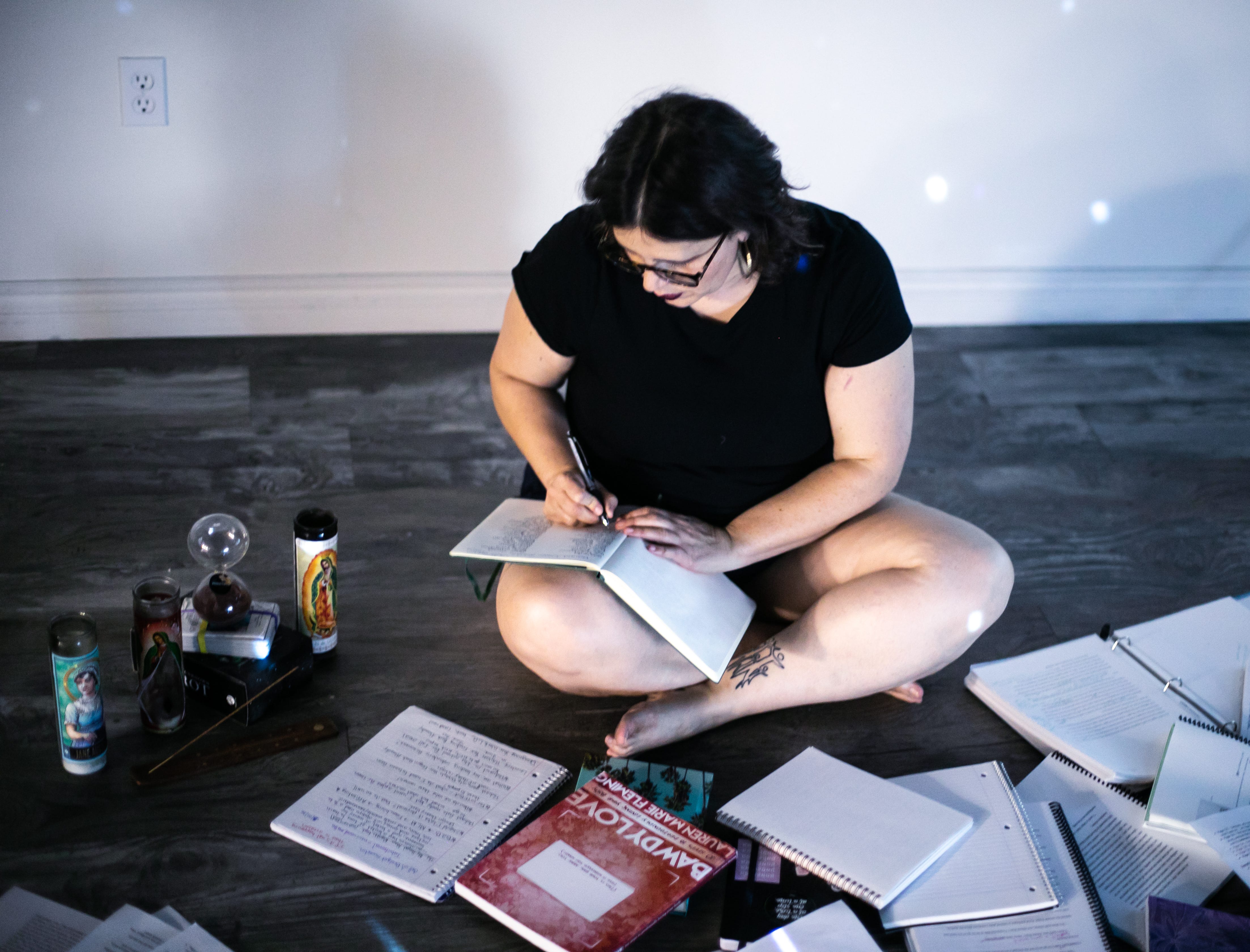
My very first book, Bawdy Love: 10 Steps to Profoundly Loving Your Body, was a whole program to help people shed body shame and love their body. I had the book, but I also had retreats and online programs surrounding it that brought in more money. People could buy the book, or they could come to a retreat and work through it with me.
It’s easy to think of retreats and products around nonfiction, but what about fiction?
I know a group of authors who write Gothic romance who rent out a castle in Scotland and invite their readers for a weekend.
There is so much swag you can create around your book — print-on-demand companies make it easy to start a shop around your stories, with favorite quotes, characters, and world building.
You can offer one-off novellas, bonus chapters, teaching guides, journals.
So many options! The limit is your imagination and entrepreneurial spirit.
Affiliate sales
Every time you recommend your own book, a book you love, or a product that appears in your book, you can link to those products and get a percentage of the sales through companies like Awin and Amazon Affiliate Links.
Just be careful — this is regulated, so you have to be open and honest about when a link is an affiliate link.
Speaking gigs
You can give speaking gigs around your book for both fiction and nonfiction. It’s easier for nonfiction, and you tend to have to be a bigger author to get paid that way — but it is paid, and I’ve been paid pretty well to give a speech.
Subscription content
You can do subscription content on things like Substack or Patreon to have people be your benefactors and get a special look behind the scenes of your writing.
There Is More Money to be Made with a Series
It’s not just that more books sold equals more money coming in, it’s also that people love a series. Once you get someone hooked, they’re likely to continue buying them all.
I cannot tell you how many times I’ve continued a series even when I didn’t really like it, just because I wanted to see how it ended.
A friend of mine is a self-publishing data nerd and she knows that when someone buys her first book, they are 60% likely to buy the second and third, and 40% likely to go all the way to the fifth book.
That means 40% of the time she’s selling four more books than she would have sold otherwise. That’s how she makes more money than most of the authors I know.
When the profit margins are so low, it’s a numbers game, so if you want to make money off of your book royalties, consider creating books that are in a series or intertwined in a way that gets people to buy them all together.
Learn More in the Book
Want to go deeper on any of this? The Writer’s Career Guide breaks down advances, royalty payments, self-publishing structures, and everything else I couldn’t fit in one post. Go grab a copy today.
My Actual Numbers
As promised, I’m going to share my actual numbers with as much transparency as I can. My goal in doing this is to debunk the starving artist myth and show the reality of a writing career.
To some, these numbers will seem huge. To others, they’ll seem paltry. To me, they’re proof that I’m making a living as a writer, and that’s what matters most.
Coaching and Courses
I don’t have the ability to share my actual traditional publishing book sales numbers. Let’s just say it’s a small drop in the bucket of my larger financial picture.
Most of my money comes from running SchoolForWriters.com and offering courses, coaching, VIP retreats, and ghostwriting.
I don’t have the exact number I have made from all of that – I could pull old tax records, but that’s a pain. What’s a lot more fun is using the 33 Asks® sticker charts I’ve created to go out there and market my programs.
That process has me tracking my results, and I can proudly and confidently say that I’ve brought in half a million dollars through 33 Asks® since I developed it in 2021.
That’s an average gross of $100,000 a year from just the 33 Asks® process.
I should note that money is from the process, not the program. While my 33 Asks® program sales have made me money, the process is where the profit is for me. It’s how I get most of my coaching and ghostwriting clients.
On top of the money made through 33 Asks®, I also have other coaching and courses I sell that boost my income.
How a One-Page Sticker Chart Changed My Life (And How It Can Change Yours)

You can learn more about the 33 Asks® process in this free Substack post. Try it out, see if it's as magical for you as it has been for me.
The Small Numbers That Add Up
While most of my money comes from coaching and courses, there are some smaller numbers that add up to helping pay my bills.
My two self-published books have made me about $6,000 total. I haven’t been great about marketing them — and you’ll see me talk about them more, I promise, so I can get those sales up.
I have interest income at about $300 to $600 a year just from keeping my money in a high yield savings account, and I make about $200 a year on affiliate sales.
I also think it’s always important to acknowledge that I do have some family financial support. While I don’t solely rely on that, I think it’s important to understand that some people have a bigger safety net, and I’m one of them.
Gross Versus Net
Running an online school is great, but it’s also got a lot of overhead. I may have grossed multiple six figures, but I was not great at keeping my costs down.
The years my company made the most money were the years I made the least as its owner. I learned the hard way that I need to pay myself before hiring more contractors and employees.
Right now, I’m working on simplifying my business so more of the money I make can end up in my own bank account.
Still, I’ve been able to generate hundreds of thousands of dollars — for both myself and for the others I pay – and I’m proud of that. That’s about what I would make as a lawyer. It’s about what I would make working a nine to five job.
And it’s proof that it’s possible to make a living as a writer.
The Takeaway: There are so many ways for you to make it as an artist.
If this is what you love — the thing you want to do the most — find a way to make it happen. It is possible, and it’s just as hard and as easy as any other career.
You’re going to go out there and you’re going to win and you’re going to fail, whatever you do. There are going to be ups and downs in whatever you choose.
So you might as well do something that you love.
You might as well go out there and tell your story.
Because the world needs our stories now more than ever.
With love and creativity,
Lauren
P.S. Want to go deeper on any of this? The Writer’s Career Guide breaks down advances, royalty payments, self-publishing structures, and everything else I couldn’t fit in one post. Go grab a copy today.